¶ 🏗️ Darwin System Infrastructure
Updated — July/2026
This document defines the Darwin infrastructure standard, including physical positioning, installation, and operational best practices.
The guidelines must be applied at every stage:
- design
- construction
- installation
- fine-tuning
- approval
¶ 🎯 Purpose of standardization
The Darwin standard ensures:
- reliable visual record of the operation
- accurate No Scan (unregistered movement) detection
- standardization across stores
- ease of maintenance and expansion
⚠️ Installations outside this standard directly compromise the system's effectiveness.
¶ 📷 Camera Positioning (POS)
Camera positioning is critical to system operation — it matters for auditing/remote monitor and, above all, for analytics (AI): Cart and Self.
The camera must capture, in the same frame:
- scanner
- scale
- product flow and cart
👉 Missing any element compromises the analysis.
¶ 📋 Reference standard (summary)
| Item | Standard |
|---|---|
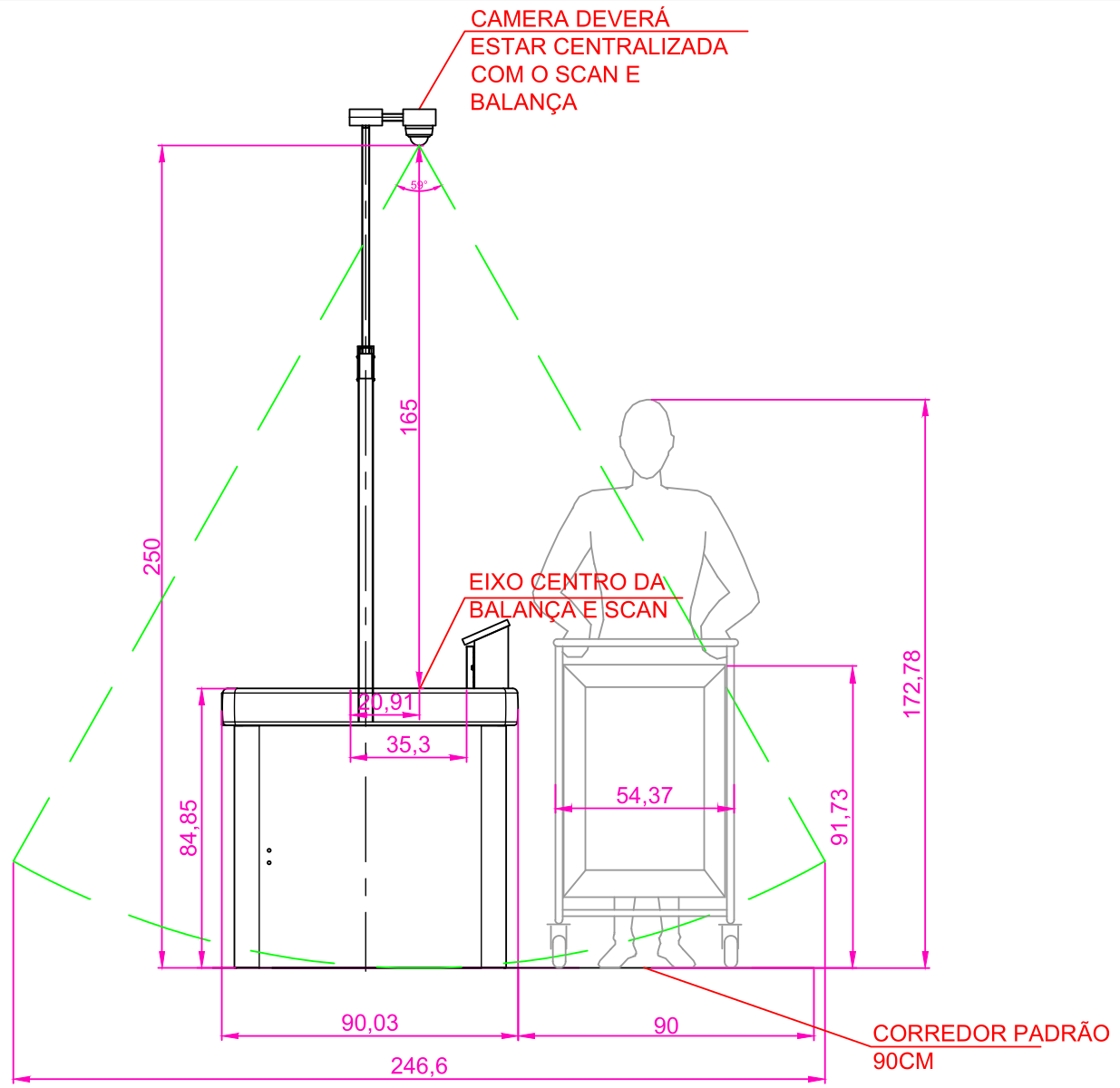
| Field of view (FOV) | ~112° |
| Aiming | 90° (perpendicular to the counter) |
| Height | ~2.50 m |
| Position | Centered on the Scan/Scale |
| Passage aisle | minimum 90 cm |
¶ 🎯 Field of View (FOV)
- Recommended angle: ~112°
Ensures:
- full POS coverage
- no image cropping
- adaptation to different layouts
📌 Practical rule:
- Low FOV → loss of information
- Adequate FOV → full operation coverage
⚠️ Lenses below the recommended spec may make the system unusable.
¶ 📐 Camera aiming
- Tilt: 90° (perpendicular to the counter)
- Axis centering:
- scanner
- scale
Benefits:
- elimination of blind spots
- greater analysis accuracy
- visual standardization
¶ 📏 Installation height
- Recommended height: ~2.50 m
Ensures:
- ideal framing
- image stability
- better movement reading
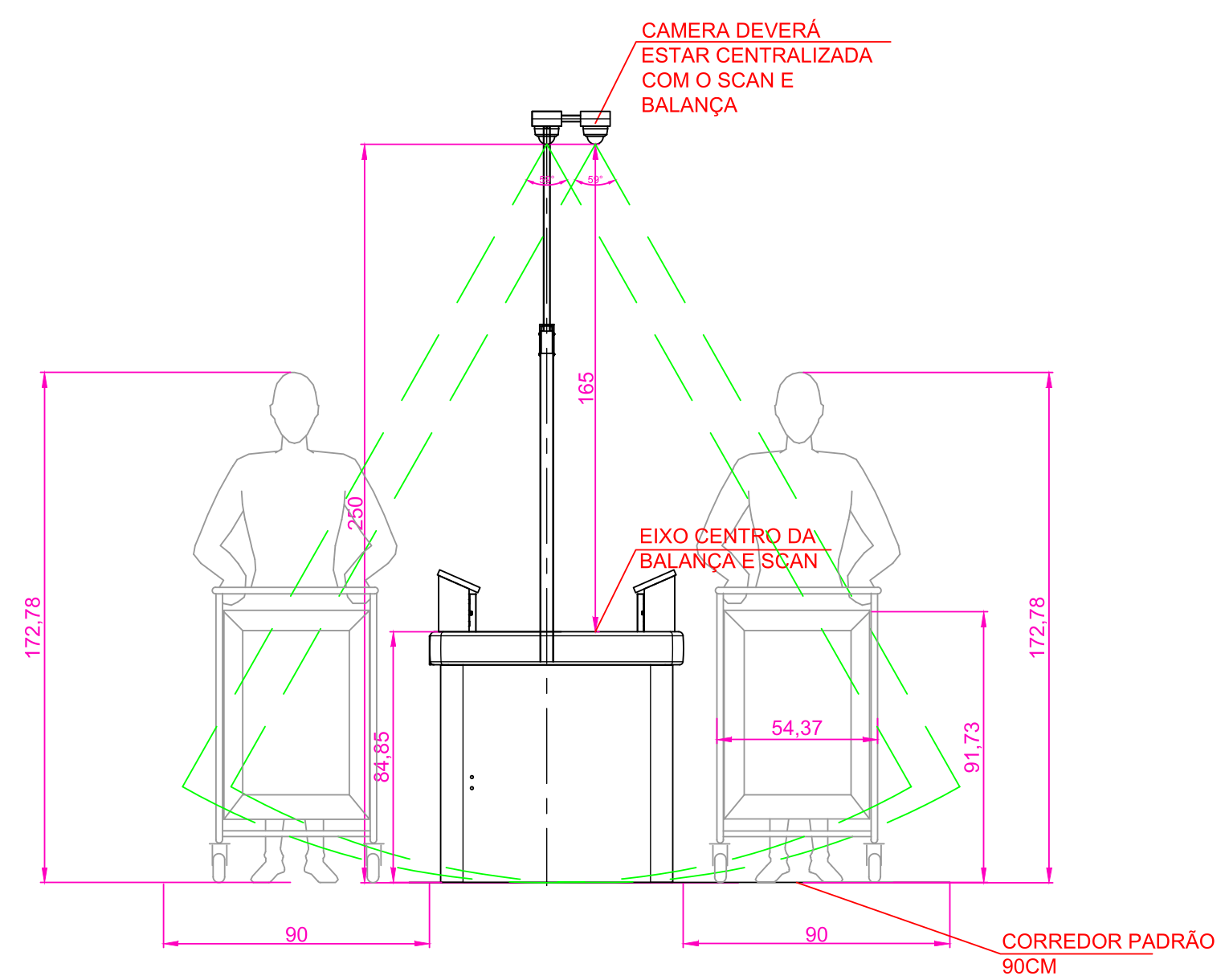
¶ 🛒 Traditional Checkout (Conventional POS and Express Checkout)
🛒 Critical for Cart analytics. Correct framing of the bottom of the cart and the passage is what lets the AI model train and go live.
Main point:
- 90° position centered on the Scan/Scale — operation in this position is excellent. Results are consistent and highly reliable, with notable performance.
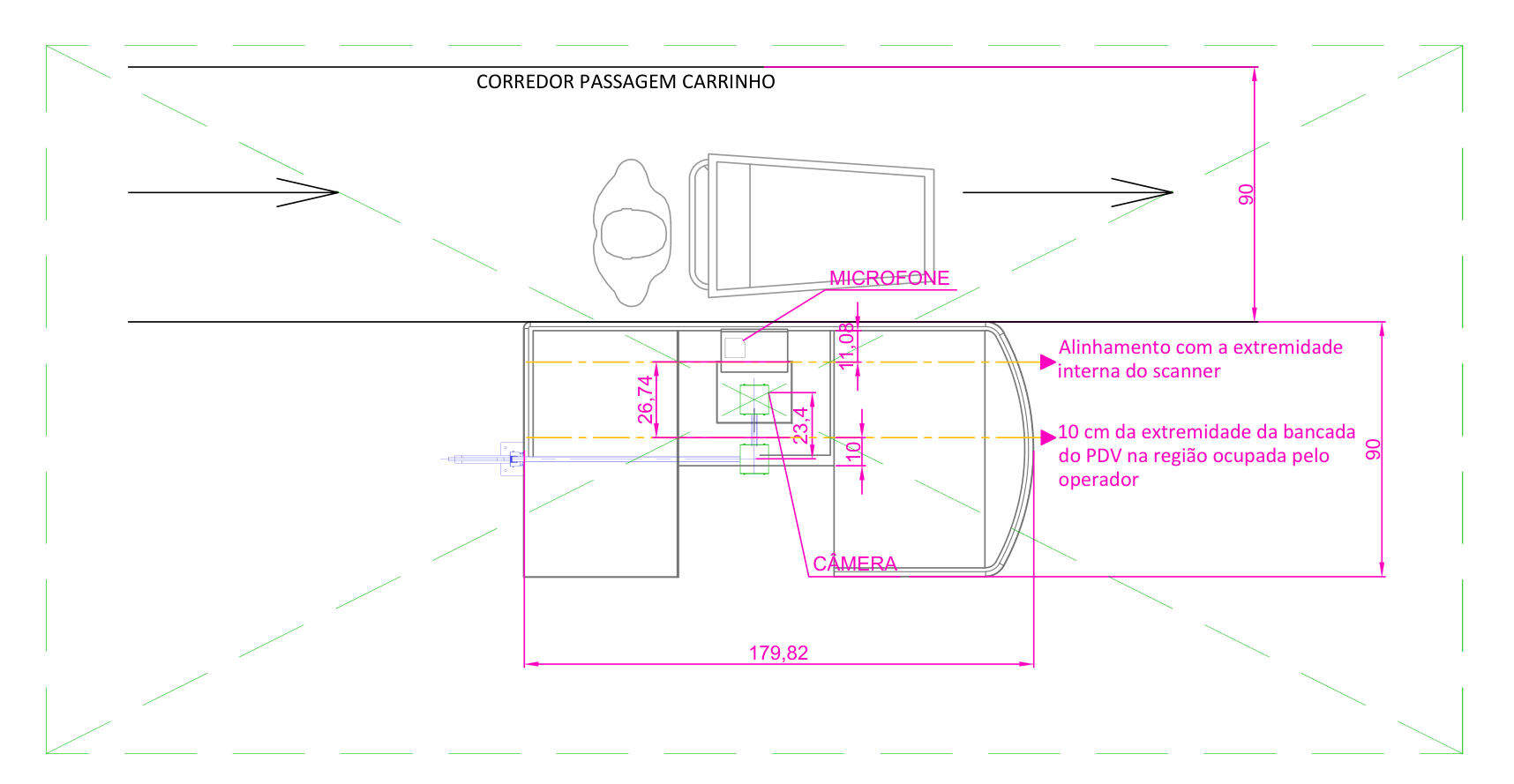
- centered camera
- full POS view
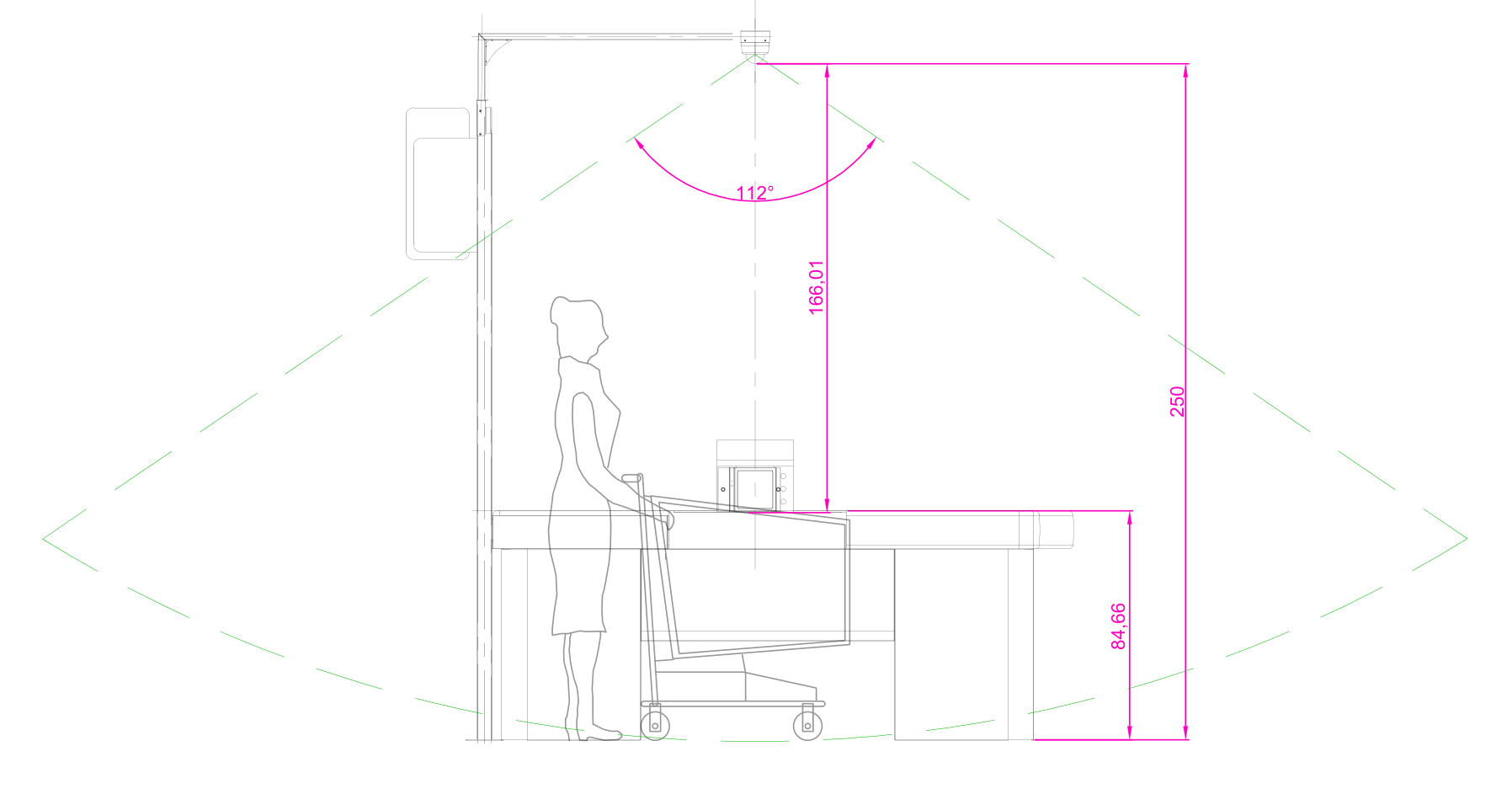
- axis alignment
- FOV ≈ 112°
- 90° tilt
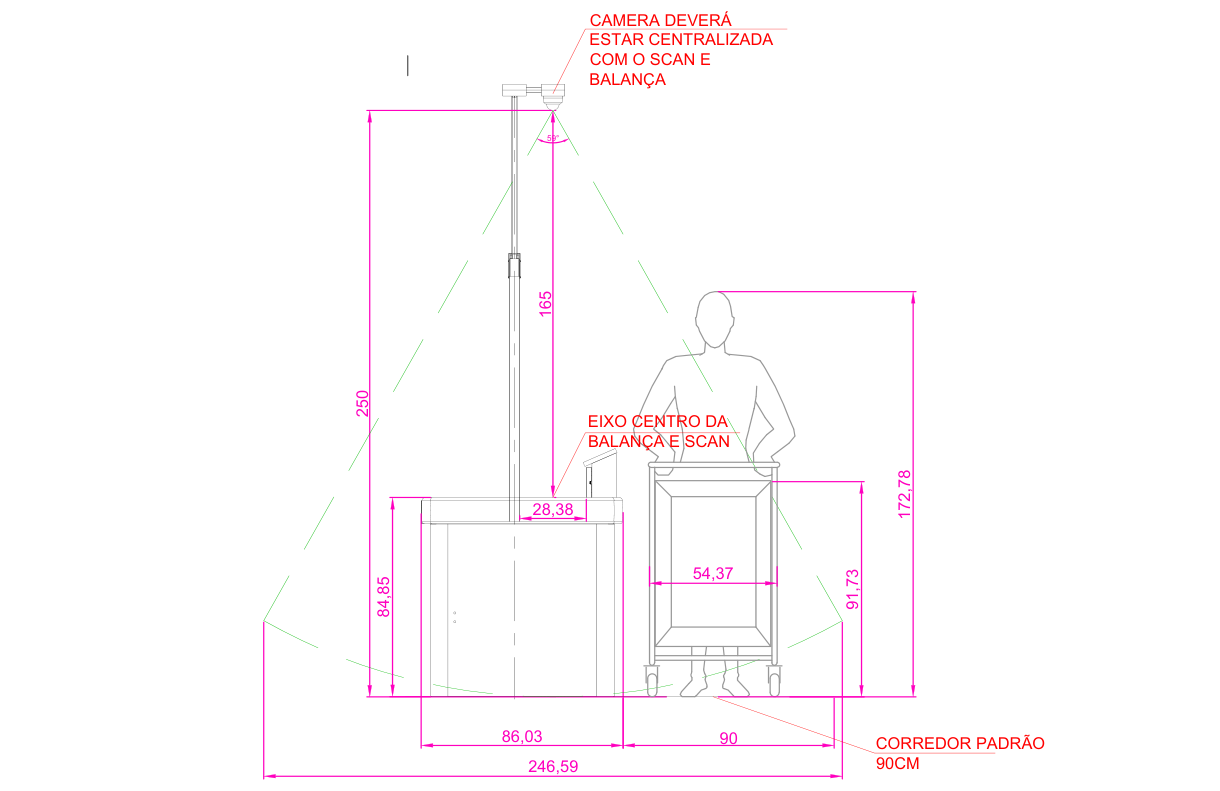
- full area covered
- no obstructions
- minimum aisle: 90 cm
¶ ✅ Mandatory rules
- camera centered on the POS
- no lateral offset
- continuous capture of:
- scanner
- scale
- cart passage
¶ 🤖 Self-Checkout (Self AI Analytics)
🧍 Critical for Self analytics. Without a fixed operator, the frame must cover the scanning/bagging area from start to finish.
Keeps the same premises as the traditional checkout, with attention to:
- variation in customer height
- absence of a fixed operator
Technical installation criteria:
- Field of view must fully cover the tray and the scale
- Prioritize the tray in the image composition
- Avoid obstructions from mounts or components
- Minimize blocking by the customer
- Preserve continuous visibility
- Prioritize image quality for AI
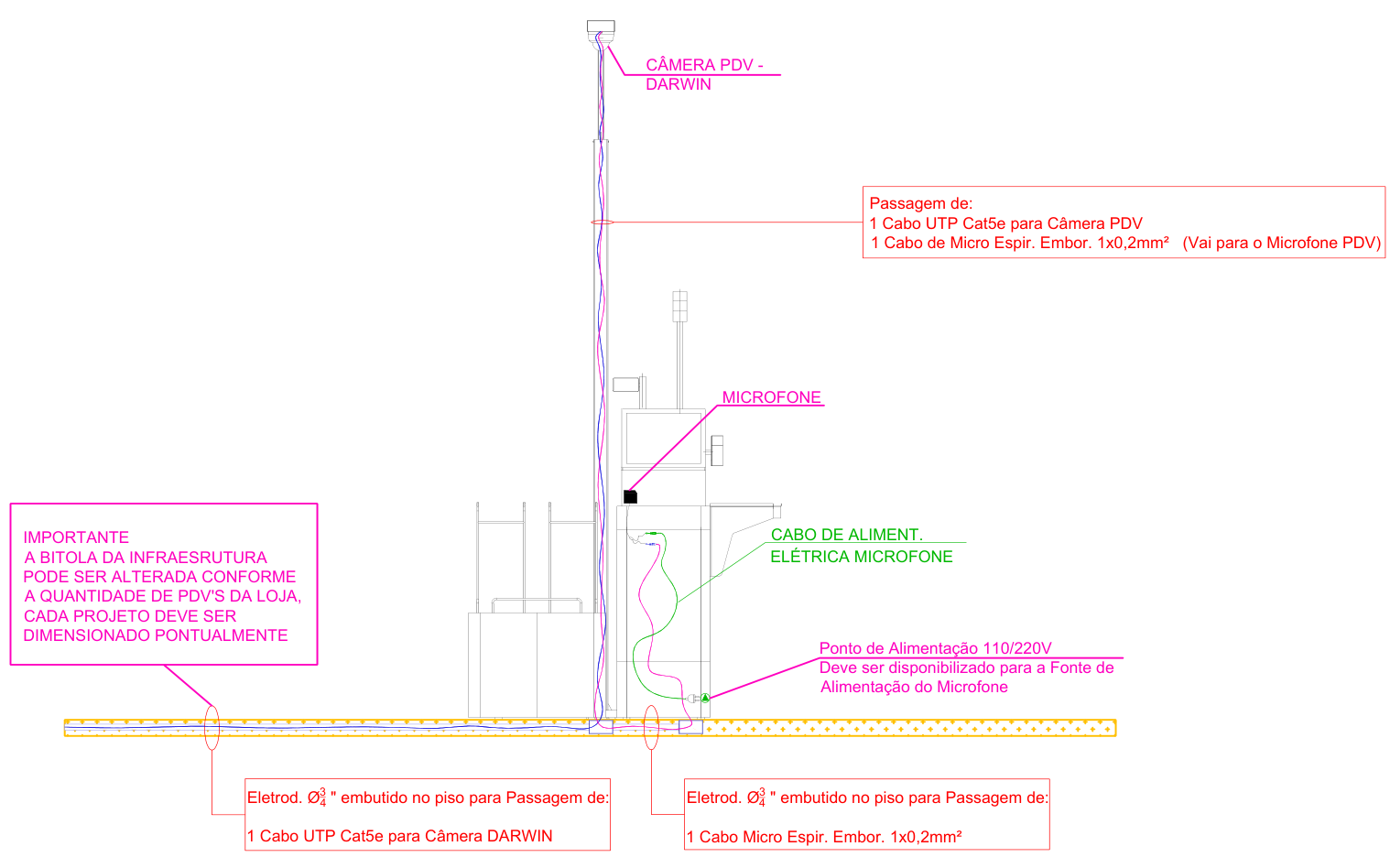
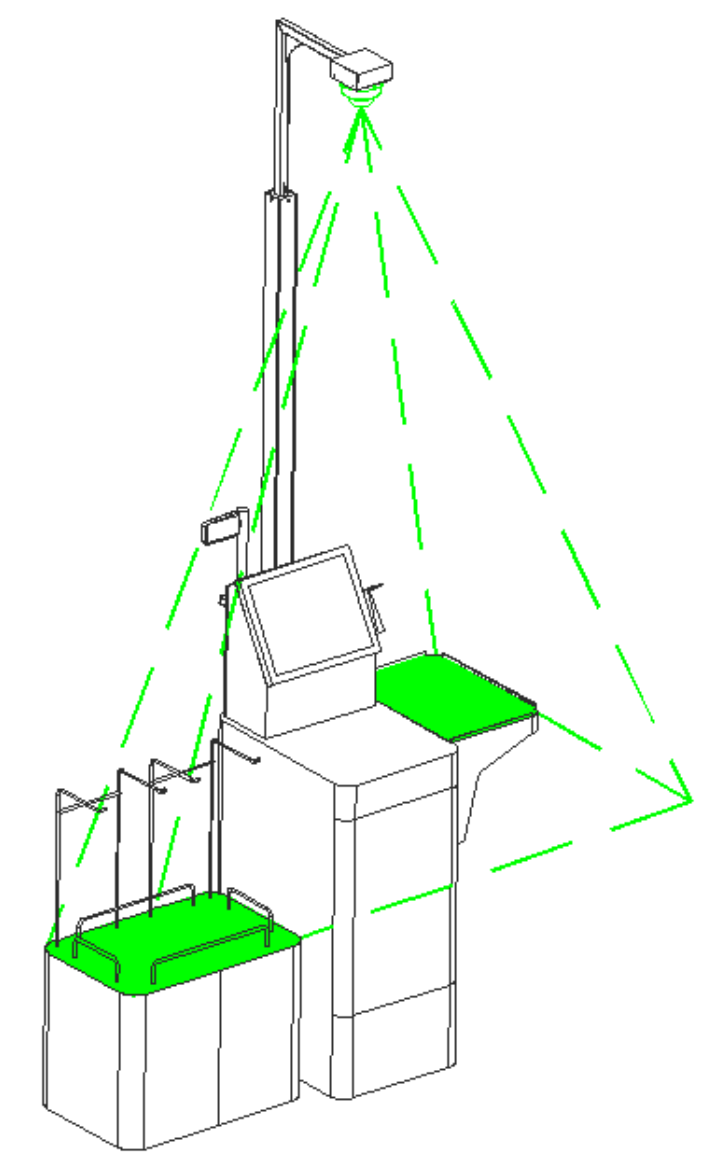
⚠️ The camera must stay aligned with the scanner and the scale.
¶ 🎧 Audio Capture
Two available models:
¶ 🔹 Audio on the camera
- built-in microphone
- simplified installation
- less cabling needed
¶ 🔹 External microphone
- greater capture control
- better audio quality
📍 Positioning:
- ~10 cm from the counter edge
- operator side
- aligned with the scanner
📌 Infrastructure:
- 1x0.2 mm² cable
- dedicated power point
¶ 🧱 Infrastructure – Cabling
¶ 🔹 Floor routing
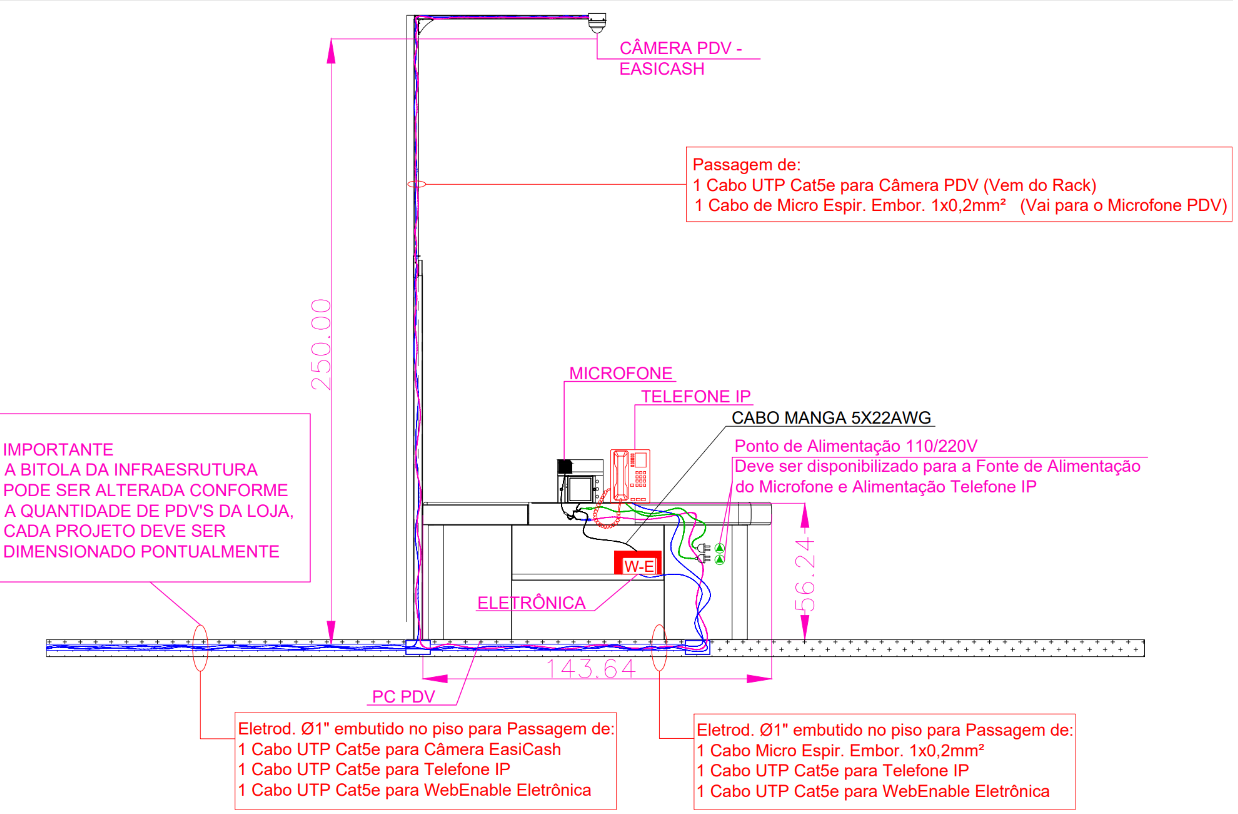
- embedded conduits
- separation between power and data
- structured construction standard
¶ 🔹 Ceiling routing
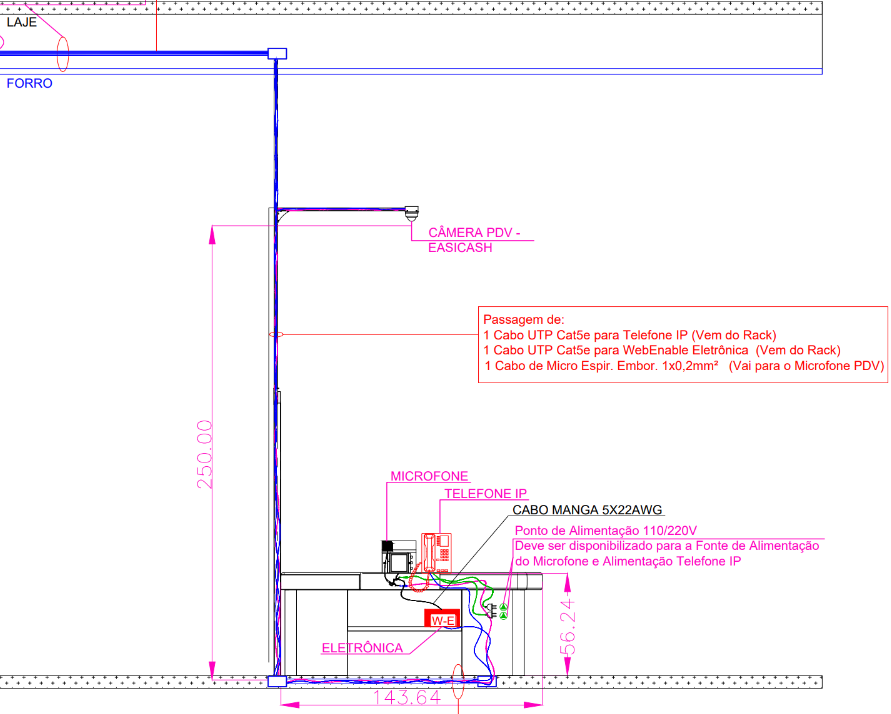
- easier maintenance
- simplified expansion
- organization via rack
¶ 🔹 Low ceiling
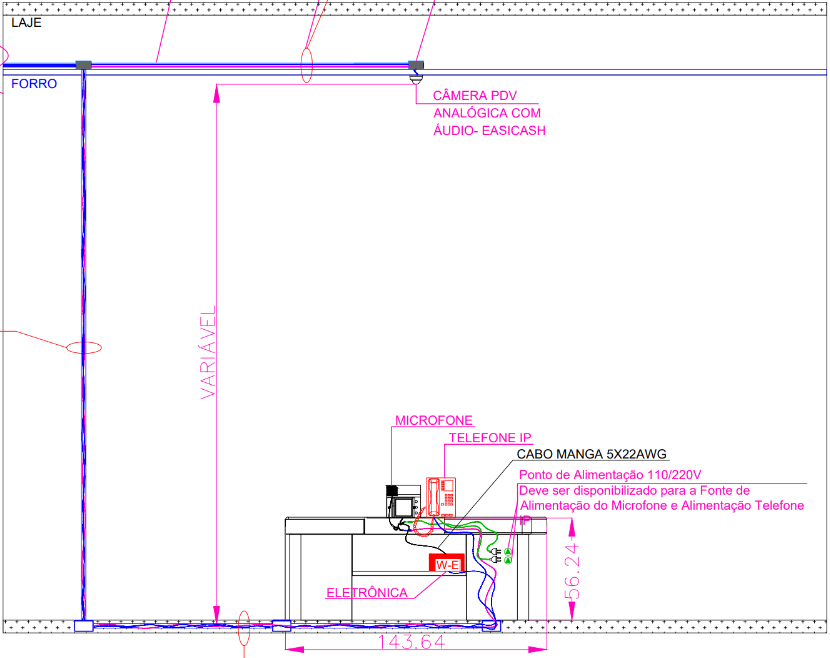
- compact environments
- structural limitations
- need for adaptation
¶ 🛡️ EasiGuard Infrastructure
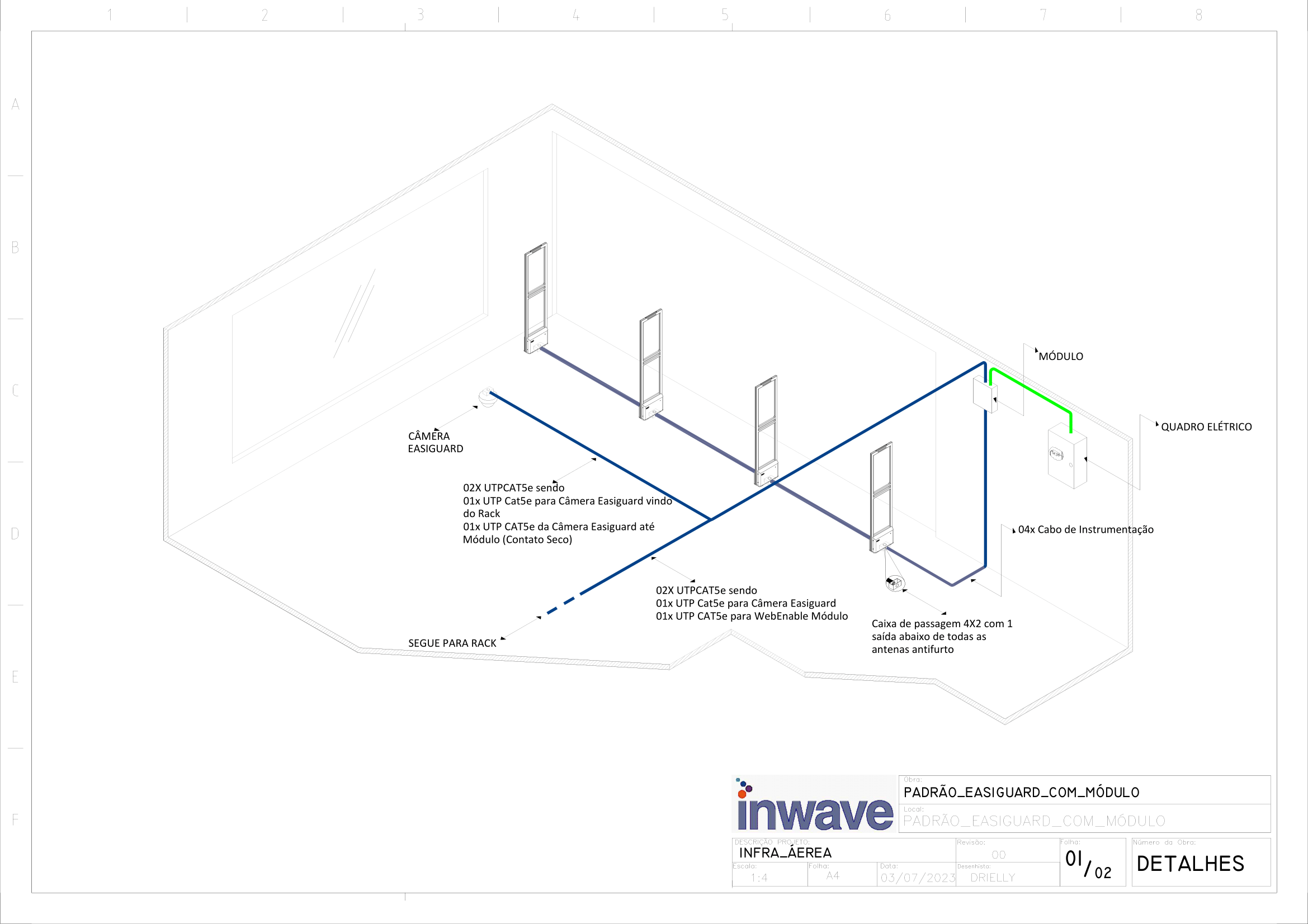
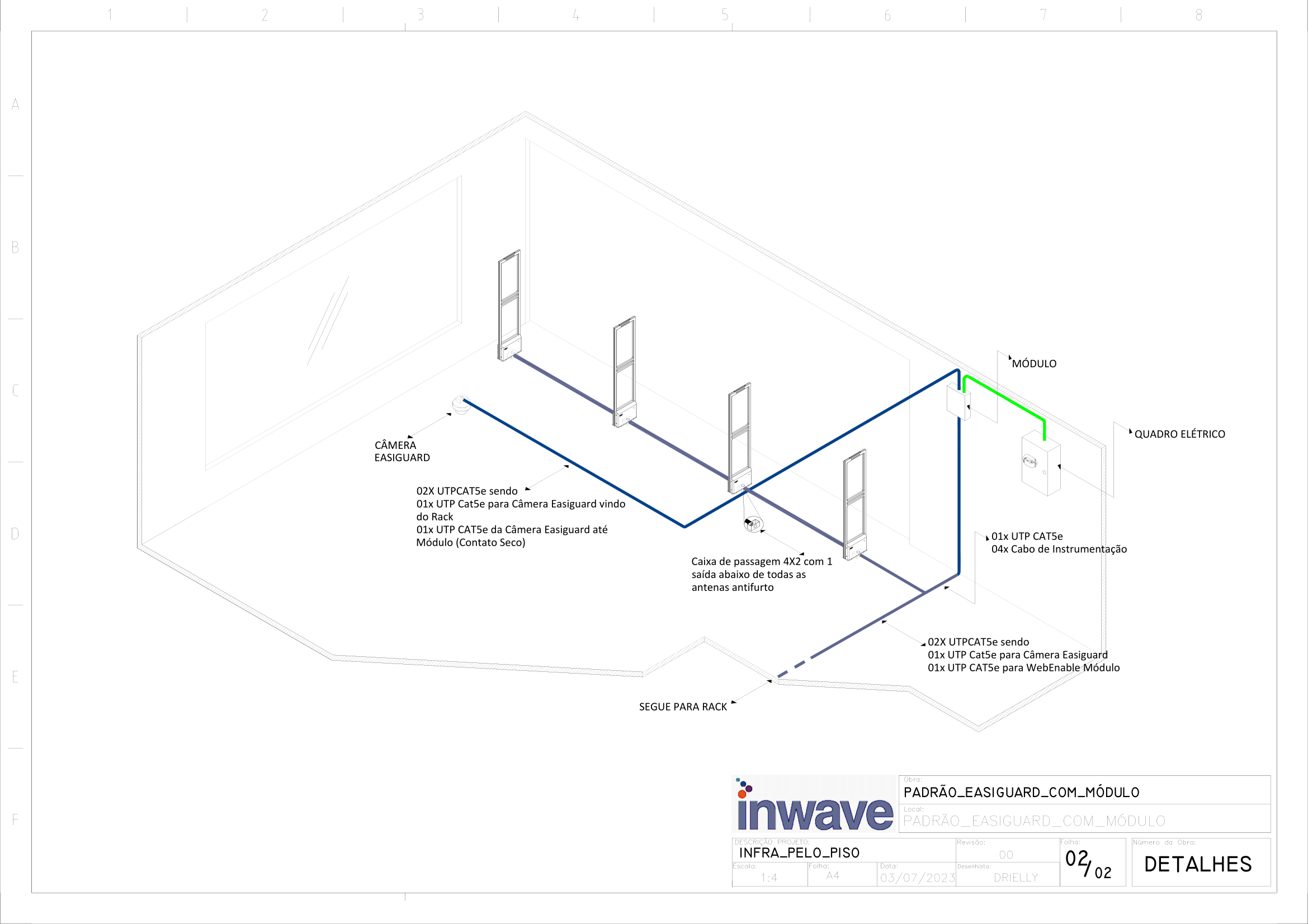
- overhead or underground routing
- correct antenna positioning
¶ 📡 RF Infrastructure
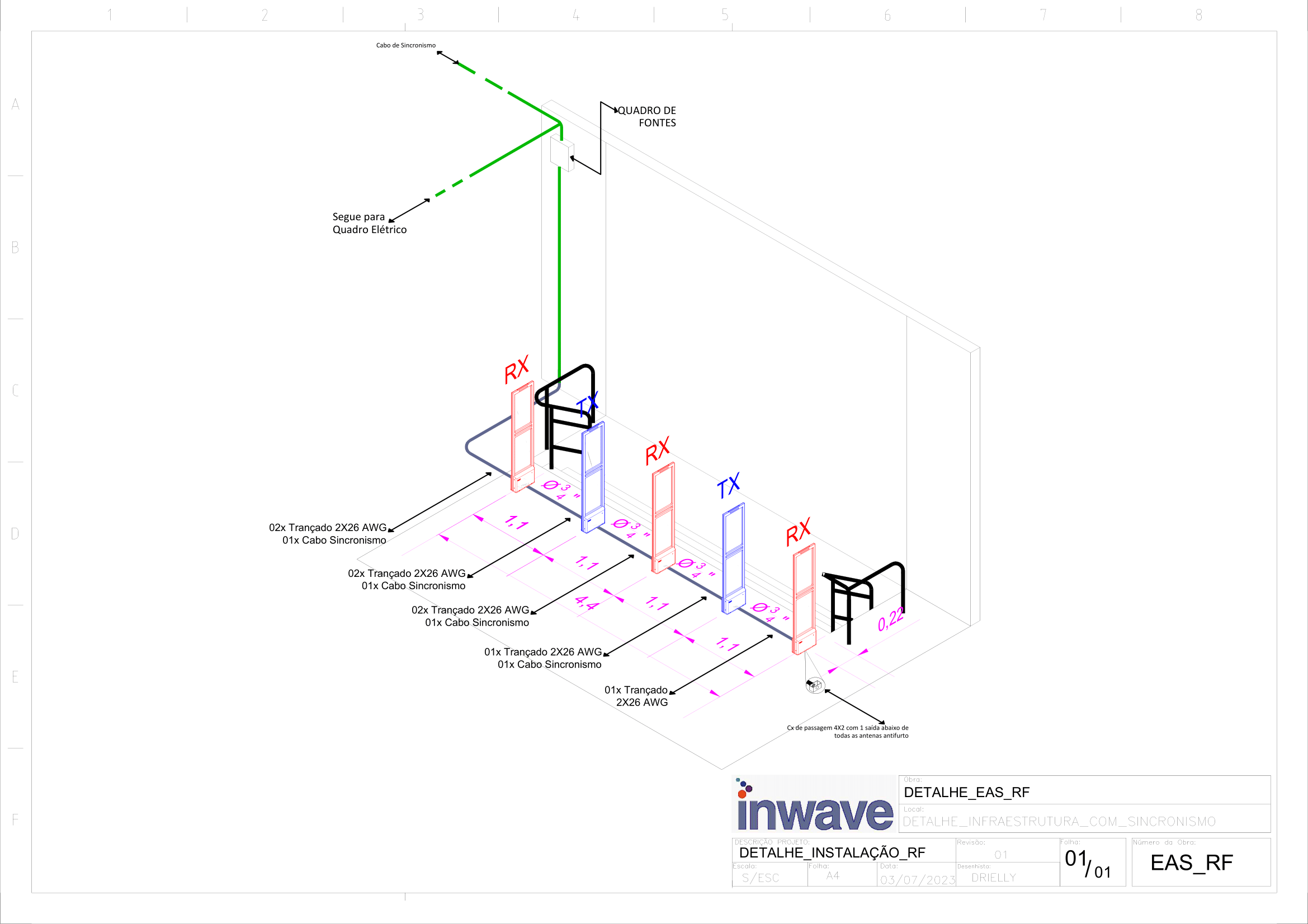
- mandatory alignment
- minimum distance respected
- avoid metal interference
¶ 📶 Web Enable Infrastructure
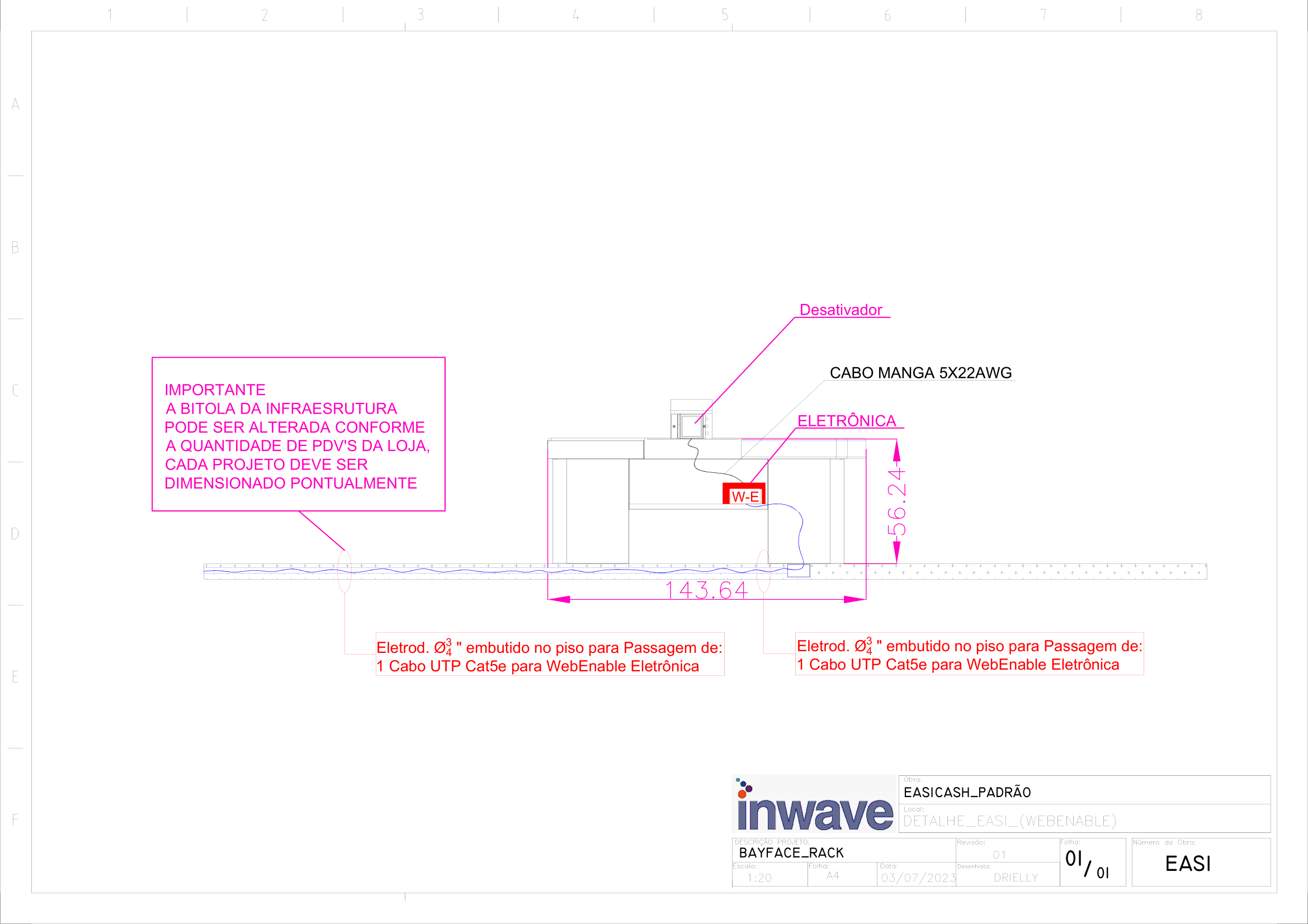
- communication between POS and devices
- integration with the system
¶ 🔌 Integration (Camera + Audio + Power)
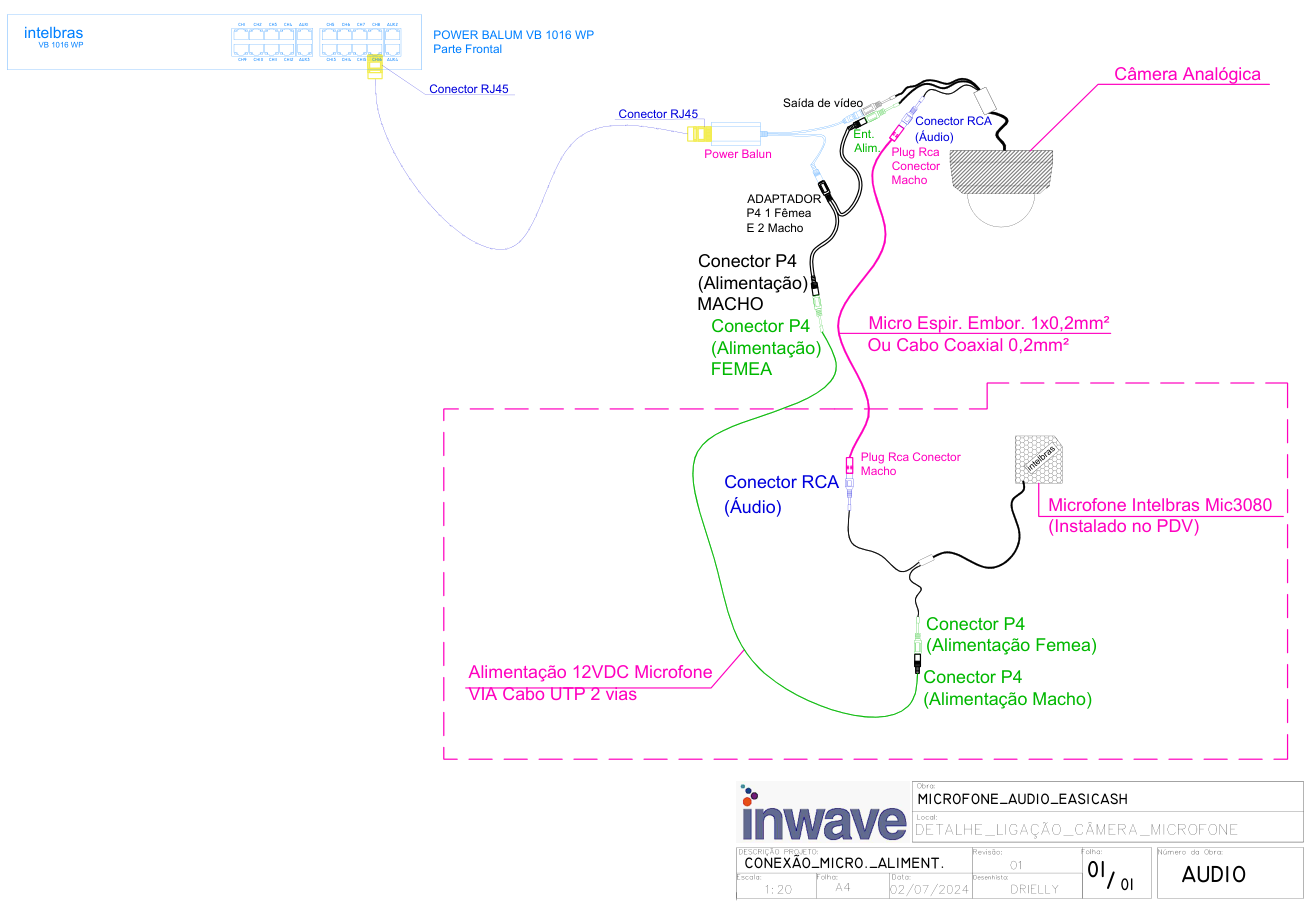
- integration of video, audio, and power
- mandatory electrical and logical separation
¶ 💡 Summary
The Darwin standard ensures:
- accuracy in video analysis
- operational reliability
- standardization across stores
- solid foundation for auditing and loss prevention
👉 Correct infrastructure = system operating correctly